May 18, 2026
·Emily Kho

A doubleheader can be one of the best deals in baseball. But, it can also be one of the most confusing, depending on how much you know going in.
Two MLB games in a single day at the same ballpark sounds simple enough. The tricky part is that not every doubleheader works the same way. In some cases, one ticket gets you into both games. In others, each game is treated as its own separate event, and you’ll need a separate ticket for each.
Understanding the difference between the two types of doubleheaders is the key to knowing exactly what your ticket gets you. Here’s how MLB doubleheaders work and how to tell which type you’re buying tickets for.
What is an MLB doubleheader?
An MLB doubleheader is when two games are played on the same day between the same teams.
Most doubleheaders today happen because of rainouts or postponements. When a game gets postponed, MLB reschedules it and that makeup game is often added to a day when the teams were already scheduled to play. That creates a two-game day.
The most important thing for fans to know is that there are two different types of doubleheaders: single-admission doubleheaders and split doubleheaders.
Single-admission vs. split doubleheaders
A single-admission doubleheader, sometimes called a traditional doubleheader, means one ticket gets you into both games. The games are played back-to-back, usually with a short break between them, and fans stay inside the ballpark for both contests.
A split doubleheader, also called a day-night doubleheader, treats each game as a separate event. The first game is typically played in the afternoon and the second at night, with several hours between them. The stadium clears out between games, and each game requires its own ticket. If you want to attend both games of a split doubleheader, you’ll need to buy two separate tickets.
The split format is more common in modern MLB because each game is ticketed separately. For fans, that means the event listing matters: if the two games appear as separate events with different start times, one ticket usually only gets you into the specific game you purchased.
How to tell which type of MLB doubleheader you're buying tickets for
This is where fans most often get tripped up. When a doubleheader is scheduled, MLB and the teams will announce whether it is a single-admission doubleheader or a split doubleheader. That announcement determines whether one ticket gets you into both games or whether each game requires its own ticket.
When browsing tickets on SeatGeek, each game of a split doubleheader is listed as a separate event with its own start time. If you see two listings for the same teams on the same day — for example, one at 1:00 PM and another at 7:00 PM — that is usually a split doubleheader, and you need a ticket for each game individually.
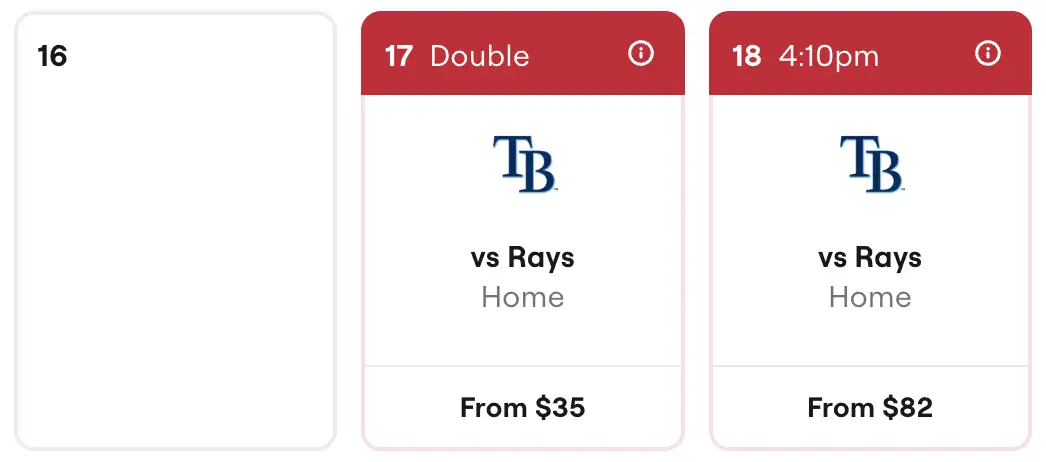
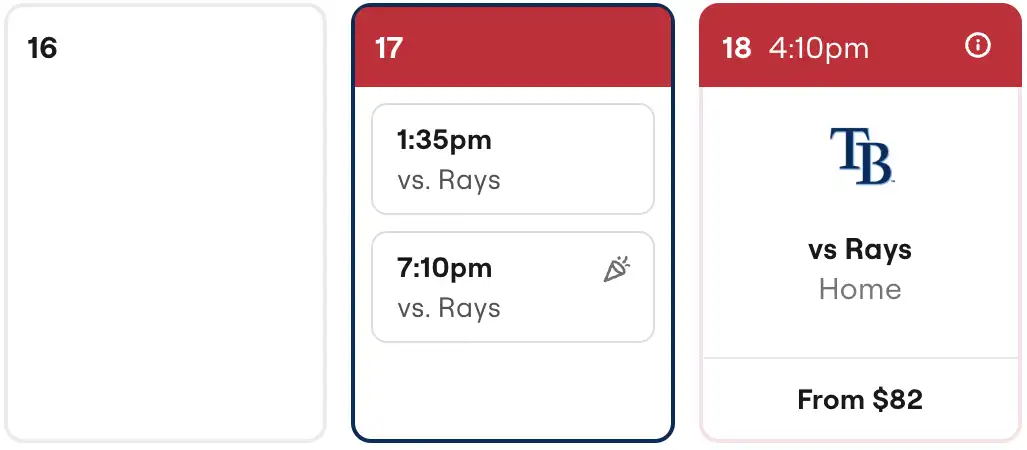
For single-admission doubleheaders, there is typically one listing that covers both games. The listing will note that it is a traditional or single-admission doubleheader, and your ticket is valid from the start of Game 1 through the end of Game 2. These are less common but still happen, particularly when a rainout gets rescheduled into an existing game day with limited calendar flexibility.
If you're unsure, check the official MLB or team announcement first, then review the event details on the listing page. SeatGeek includes start times and event descriptions that clarify whether the ticket covers one game or both.
What happens to your MLB ticket when a rainout creates a doubleheader
Rainouts are one of the most common ways MLB doubleheaders happen. You may buy tickets for a Tuesday night game, only for weather to postpone it and push the matchup onto a future date as part of a doubleheader.
The first thing to know: wait for the official update. Bad weather does not always mean a game is postponed. Some games are delayed and still played the same day, while others are rescheduled. Once MLB or the team announces the game’s new status, check your SeatGeek order and watch your email for any next steps. SeatGeek’s rainout guidance recommends checking the official game status, reviewing your order, and keeping an eye on email instructions if a game is delayed, postponed, or canceled.
If the rained-out game is rescheduled as part of a split doubleheader, your original ticket is generally tied to the specific makeup game. You would use that ticket for the rescheduled contest — whether it becomes the afternoon game or the evening game — but the other game that day would require a separate ticket.
If the makeup game becomes part of a single-admission doubleheader, ticket handling can vary by team and event. In some cases, your original ticket may be valid for the doubleheader. In others, the team may provide exchange options, a credit, or other instructions for affected fans.
When to buy MLB doubleheader tickets
Single-admission doubleheaders are among the best deals in MLB. You’re getting two full nine-inning games for the price of one ticket, which can mean five or six hours at the ballpark watching live baseball. For families, groups, or anyone who loves a full day at the park, these are worth prioritizing.
The challenge is that single-admission doubleheaders can be announced on short notice, sometimes just a day or two before the games. That means the resale market can move quickly. If you see a traditional doubleheader pop up on SeatGeek, it’s smart not to wait too long. Demand tends to spike once fans realize they’re getting a two-for-one deal.
Split doubleheaders offer a different calculation. The afternoon game of a split doubleheader often has softer demand than the evening game, which means prices may dip for the early contest. If you’re flexible on which game you attend, checking both listings and comparing prices can reveal a meaningful difference.
Weekday afternoon games also tend to attract smaller crowds, which can make for a more relaxed ballpark experience. For fans bringing kids, the early game of a split doubleheader is often ideal: you get live MLB action at a lower price point, and you’re home before bedtime.
Find MLB tickets on SeatGeek
From rivalry matchups and weekend series to weekday afternoon games and last-minute schedule changes, every MLB season gives fans plenty of chances to get to the ballpark.
As the Official Ticket Marketplace of Major League Baseball, SeatGeek makes it easy to browse the full MLB schedule, compare prices, view interactive seat maps, and find seats that fit your plans. Fans can also use features like Deal Score and View From Seat to better understand ticket value and what the view may look like before buying. SeatGeek is also integrated with the MLB Ballpark app, and purchases are backed by a Buyer Guarantee.
If a doubleheader does pop up — whether it’s a split doubleheader, a traditional single-admission doubleheader, or a rain-makeup game — you’ll be able to review the event details before you buy.
Doubleheaders may be rare, but they’re one of the quirks that make the long MLB season interesting. When the schedule shifts, knowing how tickets work can help you make the most of the day.
📁 Categories: MLB